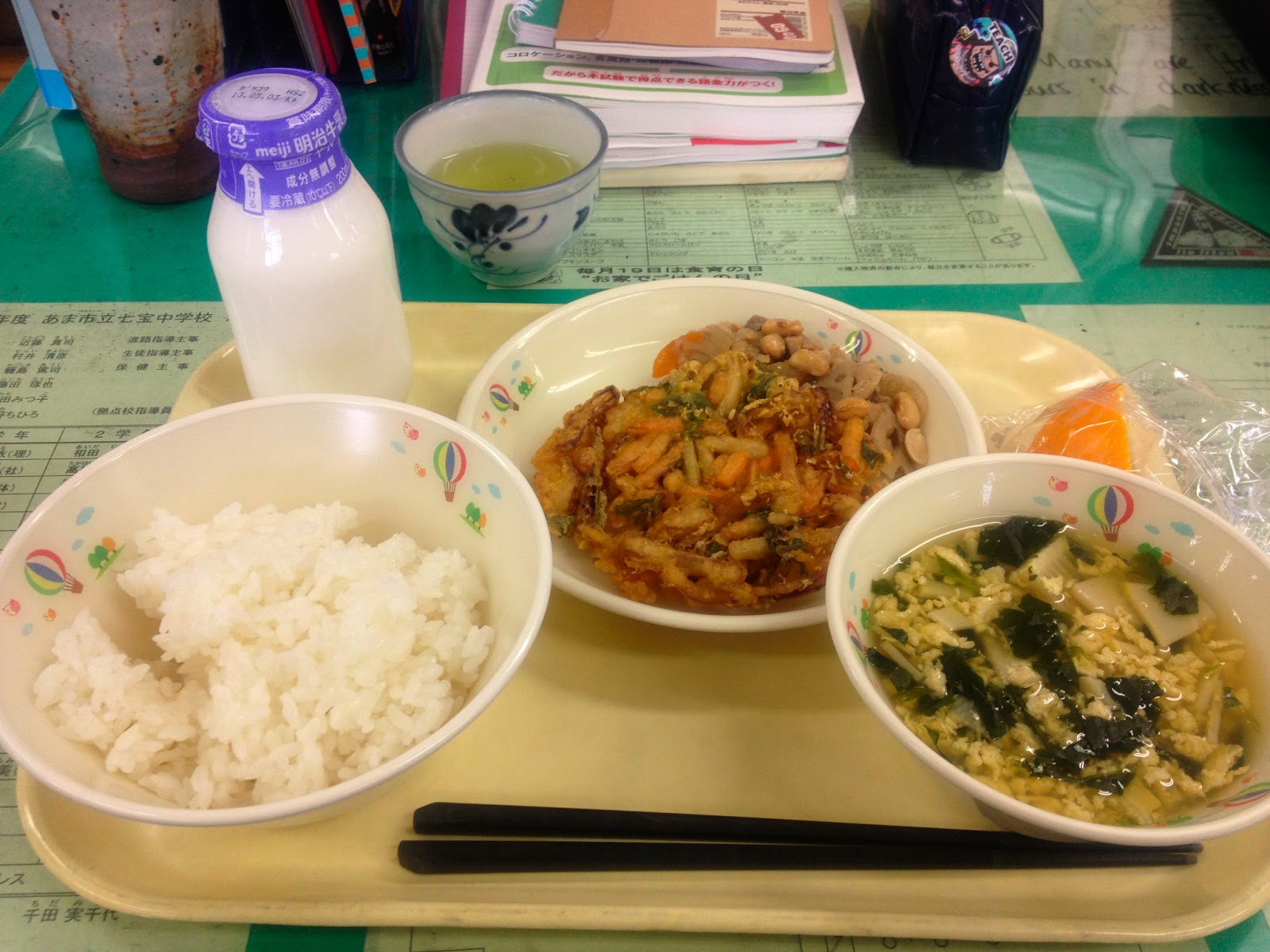
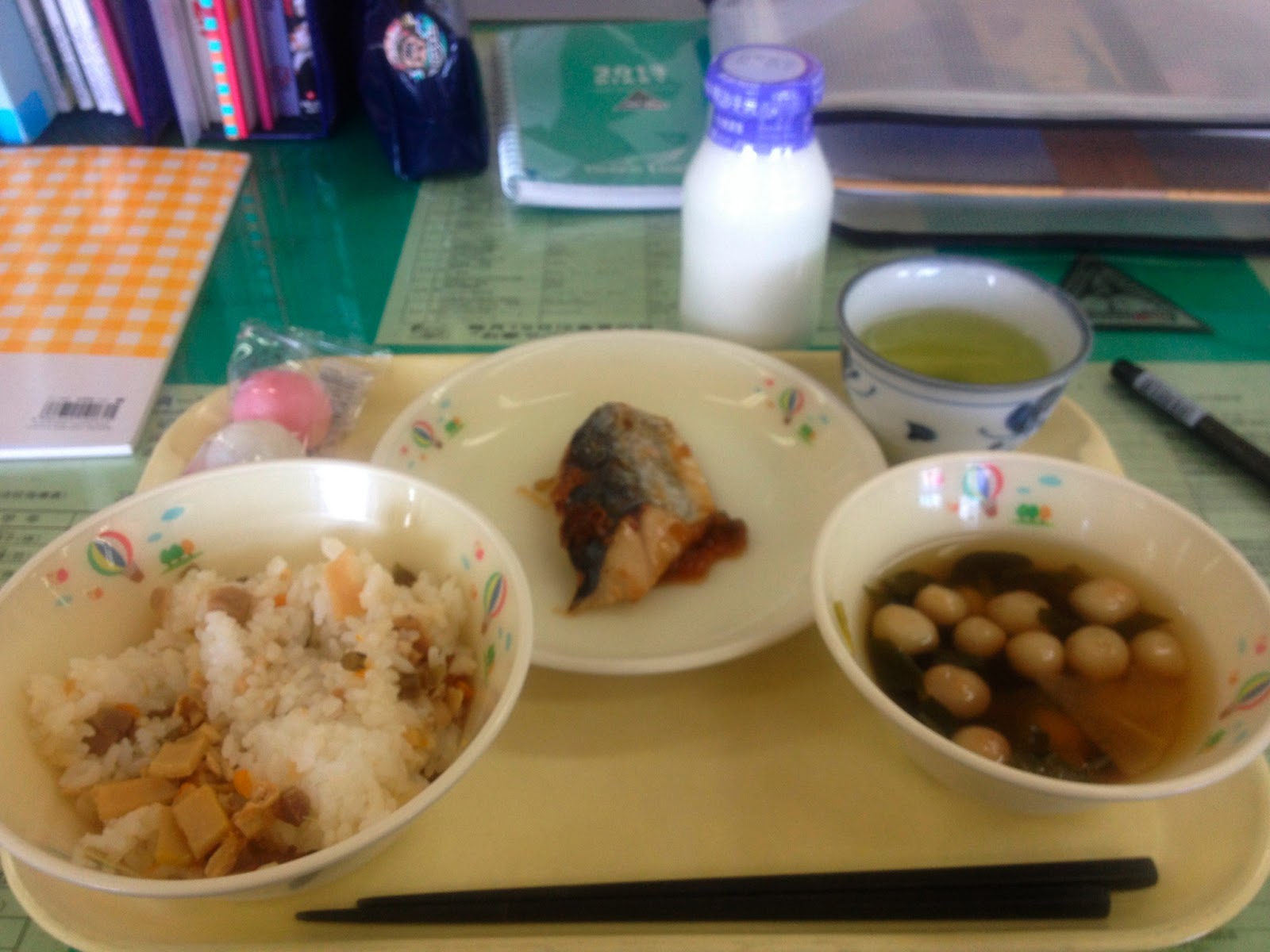
Here are more Japanese school lunches that I ate last week. For school lunches, Japanese children are given an opportunity to try many different dishes that can range from Chinese to Western to Japanese. Itadakimasu!!
Penne pasta in a tomato sauce, cucumber and daikon (white radish), bread, quiche, and milk
Rice, mixed vegetable tempura, stewed beans, egg drop soup with seaweed and tofu skin, milk, and a navel orange
Rice, chop suey, grilled gyoza (potstickers), bean sprout salad, and milk
Rice, grilled salted salmon (鮭の塩焼き), komatsu (Japanese potherb mustard leaf) and white radish with a sesame dressing, and stir-fried seaweed, pork and vegetables (ひじきの炒め煮)
Gochisosamadesita!!
2013年4月29日月曜日
Superfood for your Brain: Berries
I love blueberries!! I put them in my smoothies, yogurt, and cereal in the morning. Blueberries are extremely healthy for you. They can help improve your vision, and now, they can help your brain. Blueberries are a super food that people should start including in their diet if they have not already.
Here is a great article from Huffington Post Food section.
Berries could play an important role in clearing the accumulation of toxic proteins in the brain, according to a new study in mice.
The research, presented at the Experimental Biology 2013 meeting, showed that the brains of rats that consumed berries for two months were better protected against radiation, which is meant to induce accelerated aging in the mice.
Specifically, researchers found that the berry consumption was linked with increased autophagy, which is the natural process the brain undergoes to clear out accumulation of toxic proteins. They noted that phytonutrients -- plant chemicals -- in berries may be responsible for this effect; berries are known to be high in anthocyanins.
Researchers said that the findings could be especially meaningful if they also apply to humans, since diseases like Parkinson's and Alzheimer's disease involve accumulation of toxic proteins. The next step is a study, currently being conducted, on humans ages 60 to 75 to see if berries' have the same sort of effect.
Even though the findings have yet to be published in a peer-reviewed journal -- and thus should be considered preliminary -- a past study from Harvard researchers showed that eating berries regularly could help slow cognitive decline in older people, HuffPost's Catherine Pearson reported.
Berries Benefit Brain By Clearing Toxic Protein Accumulation, Animal Study Finds
Here is a great article from Huffington Post Food section.
Berries Benefit Brain By Clearing Toxic Protein Accumulation, Animal Study Finds
Posted: 04/27/2013 9:56 am EDT
Follow:
The research, presented at the Experimental Biology 2013 meeting, showed that the brains of rats that consumed berries for two months were better protected against radiation, which is meant to induce accelerated aging in the mice.
Specifically, researchers found that the berry consumption was linked with increased autophagy, which is the natural process the brain undergoes to clear out accumulation of toxic proteins. They noted that phytonutrients -- plant chemicals -- in berries may be responsible for this effect; berries are known to be high in anthocyanins.
Researchers said that the findings could be especially meaningful if they also apply to humans, since diseases like Parkinson's and Alzheimer's disease involve accumulation of toxic proteins. The next step is a study, currently being conducted, on humans ages 60 to 75 to see if berries' have the same sort of effect.
Even though the findings have yet to be published in a peer-reviewed journal -- and thus should be considered preliminary -- a past study from Harvard researchers showed that eating berries regularly could help slow cognitive decline in older people, HuffPost's Catherine Pearson reported.
Berries Benefit Brain By Clearing Toxic Protein Accumulation, Animal Study Finds
Posted: 04/27/2013 9:56 am EDT
2013年4月24日水曜日
Dining Dojo Kyushoku: From April 8th to the 19th
At my job, I have an opportunity to try Japanese school lunch (kyuushoku 給食) at the junior high school where I teach at. The school lunches are not made at on the school premises. Instead, the school lunches are made at local school lunch centers that are located near the school. One school lunch center is responsible for providing school lunch to the local elementary schools and junior high schools located in the neighborhood.
It should be noted that in Japan, high school students do not eat kyuushoku. The students bring lunch boxes from their house or they can order a lunch from a shop that specializes in making lunch boxes. High school education in Japan in not compulsory.
These are lunches in which I ate at the junior high school where I work at. I am not going to disclose where I work at because schools and boards of educations take school lunch very seriously. Each school has a person that is responsible for the dietary needs of the students. With the school lunch centers and other dieticians, they are responsible for making the school lunch menu everyday for which school lunch will be provided to the students.
Here are the pics of the school lunch that was given to me. Itadakimasu!!
Rice, sukiyaki, chikuwa (rolled fish cake) tempura, pickled vegetable, milk, and a strawberry crepe for dessert.
Sekihan (Adzuki (red bean) rice flavored with sesame seeds and salt, deep-fried squid, stir fried burdock root (gobo in Japanese), seaweed and tofu skin (yuba) soup, and milk
Rice, lotus root salad, pork red miso soup (tonjiru 豚汁), fried pork (yakiniku 焼き肉), and milk
Pork steamed buns, cucumber salad, Chinese soup with noodles (chuukamen 中華麺), and milk.
Rice, spinach and bean sprout with a vinegar dressing, nikujaga (stewed pork, potatoes, carrots, green peas), steamed mackerel in miso wrapped in foil, and milk
Hamburger with bun, corn and cucumber salad, alphabet noodle soup, and milk
Strawberry yogurt, curry and rice, bread pork cutlet, pickled vegetables (a typical dish that accompanies Japanese curry and rice), and milk
Mapo tofu (tofu with ground pork in a spicy sauce), rice, pork steam buns, cucumber salad, and milk.
It should be noted that in Japan, high school students do not eat kyuushoku. The students bring lunch boxes from their house or they can order a lunch from a shop that specializes in making lunch boxes. High school education in Japan in not compulsory.
These are lunches in which I ate at the junior high school where I work at. I am not going to disclose where I work at because schools and boards of educations take school lunch very seriously. Each school has a person that is responsible for the dietary needs of the students. With the school lunch centers and other dieticians, they are responsible for making the school lunch menu everyday for which school lunch will be provided to the students.
Here are the pics of the school lunch that was given to me. Itadakimasu!!
Rice, sukiyaki, chikuwa (rolled fish cake) tempura, pickled vegetable, milk, and a strawberry crepe for dessert.
Sekihan (Adzuki (red bean) rice flavored with sesame seeds and salt, deep-fried squid, stir fried burdock root (gobo in Japanese), seaweed and tofu skin (yuba) soup, and milk
Rice, lotus root salad, pork red miso soup (tonjiru 豚汁), fried pork (yakiniku 焼き肉), and milk
Pork steamed buns, cucumber salad, Chinese soup with noodles (chuukamen 中華麺), and milk.
Rice, spinach and bean sprout with a vinegar dressing, nikujaga (stewed pork, potatoes, carrots, green peas), steamed mackerel in miso wrapped in foil, and milk
Hamburger with bun, corn and cucumber salad, alphabet noodle soup, and milk
Strawberry yogurt, curry and rice, bread pork cutlet, pickled vegetables (a typical dish that accompanies Japanese curry and rice), and milk
Mapo tofu (tofu with ground pork in a spicy sauce), rice, pork steam buns, cucumber salad, and milk.
Soup with fu (a type of rice gluten), takinomi gohan (rice with bamboo shoots and vegetables, sawara (Spanish mackerel with an onion sauce, hanami dango (skewered sticky rice balls, and milk
2013年4月22日月曜日
Dining Dojo Drinks: Thai Sugar Cane Juice.
On this Dining Dojo Drinks: I tasted sugar cane juice from Thailand.
Sugar cane juice is very popular in China and many Southeast Asian
countries. In some of these countries, you can go juice stands, and
they will grind fresh sugar cane into juice for you. The juice is very
sweet as you would expect. Also, there are other flavor components in
the juice to let you know that you are not just drinking sugar water.
This is a perfect summertime drink. Also for those of you who visited Southeast Asia as a well as Hong Kong, it would bring memories and tastes.
I am wondering how to incorporate sugar cane juice into cocktail. Stay tuned to Dining Dojo for an upcoming cocktail featuring sugar cane juice.
Here is the video of me tasting Thai sugar cane juice.
This is a perfect summertime drink. Also for those of you who visited Southeast Asia as a well as Hong Kong, it would bring memories and tastes.
I am wondering how to incorporate sugar cane juice into cocktail. Stay tuned to Dining Dojo for an upcoming cocktail featuring sugar cane juice.
Here is the video of me tasting Thai sugar cane juice.
2013年4月20日土曜日
Whip It Good!! Getting a blue belt in Brazilian Jujitsu
Recently, I got my blue belt in BJJ. The video above shows a part of the graduation ceremony in which the promoted student must endure a whipping from every other student in the class. The newly promoted student understands that now they must face new challenges and are they willing to endure the punishment and hard work that comes with the new belt.
2013年4月16日火曜日
Dining Dojo Reviews Japanese School Lunch, kyushoku!!
Introducing a new section on Dining Dojo!! Due to recent events, Dining Dojo now has the opportunity to review Japanese school lunches and hopefully further the discussion on school lunches and the importance of nutrition and diet in schools.
I will be reviewing school lunches from the city in which I work at. In Japan, each city tend to have different school lunches. Some lunches at are made on the school premises, while other cities will have school lunch centers at where the lunches are made. Plus, some cities hire a private company to provide the school lunches.
I often hear that Japanese school lunches are healthy. On the school lunch menu, they list the amount of calories that are in each meal. Also, each school lunch has a glass bottle or carton of milk for the students to drink. I found this surprising because Japanese people tend to be lactose intolerant. Many of the students will drink milk. However when a student does not drink their milk, I have seen on different occasions Japanese homeroom teachers almost forcing the student to drink the milk. It all depends on the Japanese homeroom teacher.
Also, I am thinking that this will be important for anyone to read who will teaching at a Japanese public school. School lunches tend to surprise and even sometimes shock non-Japanese teachers. I hope this section will shed some light on the Japanese school lunch.
Itadakimasu!!
I will be reviewing school lunches from the city in which I work at. In Japan, each city tend to have different school lunches. Some lunches at are made on the school premises, while other cities will have school lunch centers at where the lunches are made. Plus, some cities hire a private company to provide the school lunches.
I often hear that Japanese school lunches are healthy. On the school lunch menu, they list the amount of calories that are in each meal. Also, each school lunch has a glass bottle or carton of milk for the students to drink. I found this surprising because Japanese people tend to be lactose intolerant. Many of the students will drink milk. However when a student does not drink their milk, I have seen on different occasions Japanese homeroom teachers almost forcing the student to drink the milk. It all depends on the Japanese homeroom teacher.
Also, I am thinking that this will be important for anyone to read who will teaching at a Japanese public school. School lunches tend to surprise and even sometimes shock non-Japanese teachers. I hope this section will shed some light on the Japanese school lunch.
Itadakimasu!!
2013年4月15日月曜日
Dining Dojo Resturants: Beef House Okuma
Recently, my wife and I celebrated her birthday by going to a great steakhouse named Beef House Okuma. The restaurant is located in Sakae, Nagoya in the Matsuzakaya Department Store on the tenth floor. The steak house features wagyu from Kagoshima which is located in the southern part of Kyushu. We went there for lunch, and we had a very delicious lunch box.
The lunch box also came with a bowl of white rice, a bowl of red miso soup, and some Japanese pickles.
The restaurant tends to be poplar on evenings and on the weekends. Reservations are advised.
The restaurant is located on the 10th floor of the Matsuzakaya Department Store in Sakae, Nagoya
http://goo.gl/maps/G85PP
The lunch box was for around 3000 yen ($35.00) It featured simmered sweet potato, crab cream croquette, hamburger steak and mashed potatoes, sashimi (tai and katsuo), Kagoshima dry-aged wagyu, and roast beef.
Here are some pics of the individual dishes.
After the lunch box, came desert. The desert was hot coffee and pannacotta with strawberry syrup.
The restaurant is located on the 10th floor of the Matsuzakaya Department Store in Sakae, Nagoya
http://goo.gl/maps/G85PP
登録:
投稿 (Atom)